Home
About Us
Meet Your Eye Doctors
Meet Your Eye Team
Vision Insurance
Notice of HIPAA Privacy Practices
Internal Access Only
Email
Patient Forms
Tools
Stats
Contact US & Maps
Inter-active Maps
Phone / Email / Contact Us
Refer a Friend!
Eyewear Gallery
Preferred Designers Frames & Designer Sunglasses
Test Your EyeQ
Frame Shape Selection Guide
Eyeglass Guide 2.0
Computer Vision Syndrome
About Sports Vision
Sport Frames and Lens Chart
Asian Fit
Recommended Lenses
HOYA
Hoya Lens Guide
Hoyalux GP Wide
Hoyalux iD
Hoyalux iD Lifestyle
Hoyalux Summit
HOYA 1.70 Hi Index
iZon High Resolution Lenses
KODAK
Kodak Precise Short Progressive
Kodak Unique Progressive
Kodak Precise Progressive
Varilux
Varilux DRx Lenses
Varilux Physio Enhanced
Varilux Comfort Enhanced
Varilux S Series Lenses
Varilux Physio 360 - Progressive Lenses
Varilux Ellipse 360 - Progressive Lens for Small Frames
Varilux Liberty - Progressive Lens for Bi/Trifocal wearers
Varilux Panamic 360 - Progressive Lenses
Varilux Comfort 360 - Progressive Lenses
Varilux Comfort - Progressive Lenses
Varilux Progressive (Invisible) Lenses
Varilux Ipseo
Definity Lenses
Xperio Polarized Lenses
Lens Guide
1.74 Thin & Lite High Index Lens
Transitions (Lenses That Change Colors)
Transitions ExtrActive
Polarized Lenses - Glare reducing lenses
Crizal Anti-reflective Treatment
Crizal Avancé™ with Scotchguard™
Crizal Sapphire™
Crizal SunShield
HOYA - Super HiVision Treatment
HOYA - Super HiVision EX3 Treatment
Kodak Clean'N'Clear
Driverwear
Safety Glasses
Industrial Safety
Sports Safety
About Sports Vision
Sport Lens Chart
FAQ's Eyeglasses
Eye Conditions
Cataracts
What is a Cataract?
Is Cataract surgery right for me?
The Cataract Procedure
What to Expect; Before, During, & After
Cataracts FAQ's
Myopia (Nearsighted)
Hyperopia (Farsighted)
Keratoconus
Astigmatism
Presbyopia
Blepharitis
Diabetic Retinopathy
Detached Retina
Dry Eye
Dry Eye Treatment
Floaters & Flashes
Amblyopia or "Lazy Eye"
Strabismus
Conjunctivitis (Pink Eye)
ARMD (Age Related Macular Degeneration)
Glaucoma
Ocular Allergies
Computer Vision Syndrome
Low Vision
Contact Lenses
Types of Contacts Lens
Lens Care & Handling Instructions
Soft Lens
Acuvue Brand
General Information
1•DAY Acuvue
1•DAY Acuvue MOIST
1•DAY Acuvue MOIST for Astigmatism
1•DAY Acuvue TruEye
®
Acuvue 2
Acuvue 2 Colours
Acuvue Advance
Acuvue Advanced for Astigmatism
Acuvue Oasys
Acuvue Oasys for Astigmatism
Bausch & Lomb
Boston MultiVision
Optima
®
PureVision
®
PureVision
®
2
SilSoft
®
SofLens
®
CIBA VISION
General Information
AIR OPTIX
®
AQUA
AIR OPTIX
®
for ASTIGMATISM
AIR OPTIX
®
AQUA MULTIFOCAL
AIR OPTIX
®
NIGHT & DAY
®
AQUA
DAILIES
®
Contact Lenses
Contact Lenses for Astigmatism
FreshLook
®
Colors
Cooper Vision
General Information
Avaira
Biofinity
Biomedics
ClearSight
Expressions
Cooper Lens Selector
Expressions
Expressions Accents
Crazy Lenses
Frequency
Hydrasoft
Preference
Proclear
Contact Lenses FAQ's
Contact Lens Care Solution
Alcon Opti-Free Replenish
Bausch & Lomb Biotrue
™
Bausch & Lomb ReNu
CIBA Aquify/CIBA Clear Care
Alcon Opti-Free PureMoist
Contact Lens Rebate Center
Pediatric Vision
Infant Vision
PreSchool Vision
School Age Vision
Amblyopia or "Lazy Eye"
Protective Eyewear
Computer Impact on Children's Vision
InfantSEE®
About Sports Vision
Sports Vision Designer Frame and Lens Chart
LASIK
LASIK
What is LASIK
Am I a candidate for LASIK
The LASIK procedure
How it Works- The Wave Print System
What to Expect- Before, during & after
PDF Booklet Myopia (Nearsighted)
PDF Booklet High Myopia (Nearsighted)
PDF Booklet Hyperopia (Farsighted)
PDF Booklet Mixed Astigmatism
FAQ's LASIK
FAQ's IntraLase
Custom
Vue
LASIK Movie
LASEK
What is LASEK
Am I a candidate for LASEK
The LASEK procedure
How it Works- The Wave Print System
What to Expect
PDF Booklet Myopia (Nearsighted)
PDF Booklet High Myopia (Nearsighted)
PDF Booklet Hyperopia (Farsighted)
PDF Booklet Mixed Astigmatism
FAQ's LASEK
Epi-LASIK
What is Epi-LASIK
Am I a candidate for Epi-LASIK
The Epi-LASIK procedure
How it Works- The Wave Print System
What to Expect
PDF Booklet Myopia (Nearsighted)
PDF Booklet High Myopia (Nearsighted)
PDF Booklet Hyperopia (Farsighted)
PDF Booklet Mixed Astigmatism
FAQ's Epi-LASIK
PRK
What is PRK
Am I a candidate for PRK
The PRK procedure
How it Works- The Wave Print System
What to Expect
PDF Booklet Myopia (Nearsighted)
PDF Booklet High Myopia (Nearsighted)
PDF Booklet Hyperopia (Farsighted)
PDF Booklet Mixed Astigmatism
FAQ's PRK
Visian ICL
What is Visian ICL
Am I a candidate for Visian ICL
The Visian ICL procedure
What to Expect
FAQ's Visian ICL
Verisyse™ Phakic (IOL)
Refractive Lens Exchange
FAQ's
FAQ's Eyeglasses
FAQ's Contact Lenses
FAQ's Varilux
FAQ's Glaucoma
FAQ's Cataracts
FAQ's Dry Eye
FAQ's LASIK
FAQ's IntraLase
FAQ's LASEK
FAQ's Epi-LASIK
FAQ's PRK
FAQ's Visian ICL
Vision Glossary
Check Your Order Status
On-line Promotions!
Post Read Testimonials
Make an Appointment
Submit Exam Registration
Evaluate Your Visit
Dry Eye Evaluation
LASIK Questionnaire
Order Contact Lenses
Presbyopia
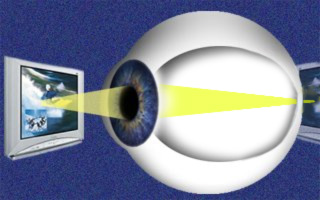
Presbyopia is an aging condition where the lens of the eye loses its ability to focus. The lens is the part of the eye that works with the cornea to focus light on the retina. When the lens, cornea and retina work together correctly, the result is a clear, sharp image.
Presbyopia, is also known as the "short arm syndrome", is a term used to describe an eye in which the natural lens can no longer accommodate.
Accommodation is the eye's way of changing its focusing distance: the lens thickens, increasing its ability to focus close-up. From the day we are born, our ability to focus up close starts to diminish.
At about the age of 40, the lens becomes less flexible and accommodation is gradually lost. It's a normal process that everyone eventually experiences. In presbyopia, the lens is weakened, producing blurry images.
Causes
Presbyopia is a natural part of aging and affects everyone eventually. As the eye ages, the elasticity of the lens decreases and the lens itself may thicken. The ciliary muscles that hold the lens in place also decrease in elasticity. These changes are believed to cause trouble with near vision.
Onset and Treatment
Presbyopia will affect everyone, but usually not until age 40. At that point, the eyes’ ability to focus decreases gradually. Even if the patient has never had any vision problems previously, they will develop presbyopia. Nearsighted people also develop presbyopia, even though they are used to having good near vision. A nearsighted person may find they need to hold a newspaper or tablet at arm’s length to see it, just like any other person developing presbyopia.
Another symptom of presbyopia is eye strain when performing close work, such as typing. Bifocals are the common treatment for presbyopia. Bifocal lenses have two points of focus, one for distance and one for near vision. The distance vision portion takes up the main part of the lens, with the near vision portion at the bottom in a little box. Progressive addition lenses are another kind of lens that can be used for presbyopia. They are similar to bifocals, with more of a gradual transition between the two points of focus. Multifocal contact lenses can also be prescribed.
Reading glasses can also be worn for presbyopia and are normally only worn for close work. If the patient already uses contact lenses, the doctor can prescribe reading glasses that can be combined with their contacts.
It is possible to develop presbyopia before age forty. Early development of presbyopia is known as premature presbyopia.
Farsightedness and some diseases such as diabetes and muscular sclerosis are risk factors for premature presbyopia.
In addition, some prescription drugs like antidepressants and antihistamines can inhibit the eyes’ ability to focus.
Treatment
Reading glasses, bifocals or progressive lenses. Some people are concerned that wearing reading glasses will weaken the eyes. Because the process is continuous, our need for reading glasses will increase whether we wear them or not and whether we like it or not. The reading glasses do not weaken our eyes.
A
dvanced Treatment
Advanced treatments for presbyopia include a couple surgical options:
•
Conductive keratoplasty:
A non-laser refractive surgery that reshapes the cornea using low-level radio frequency energy. The tissue at the site of the application shrinks and tightens the cornea, changing the curvature and producing clear near vision. The correction is temporary, and will diminish over time.
•
Laser eye surgery:
A surgical procedure where vision is corrected by removing a small part of the eye with a laser. Using a highly focused laser beam, a specialist cuts away a bit of eye tissue, flattening the cornea and correcting the focus. Patients with presbyopia undergoing laser eye surgery can be given monovision, a method where one eye is corrected for near vision and one eye is corrected for far vision.
•
Refractive lens replacement surgery
: A surgical procedure where the natural lens of the eye is removed and replaced with an artificial lens. This allows vision to be corrected at all distances.
Diagnosis
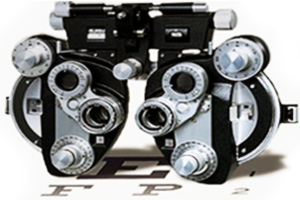
A diagnosis of presbyopia can be made during the course of a comprehensive eye exam. A machine called a phoropter allows the doctor to show a series of lenses to a patient, switching back and forth between them to determine the best fit for corrective lenses.
Reading glasses are a common solution for mild presbyopia. You can purchase reading glasses at drug store, but they are only temporarily effective because the lenses are not your prescription and over time that may do more harm than good.
Because the lens of the eye is slowly changing over time, periodic examinations are needed to update corrective lenses.
Prevention
Since it is a natural part of the aging process and not a disease, there are no preventative measures for presbyopia. Maintaining overall health as a means to eye health is always recommended. Fruits and vegetables high in vitamins A, C and E are key foods for eye health.
Taking frequent breaks while doing close work allows the ocular muscles to unwind. Try looking off into the distance every ten minutes or so to keep your eyes relaxed. Wearing sunglasses to prevent UV damage to the eyes helps keep vision sharp later in life.
When to see an eyecare professional
If you are over forty and developing headaches after doing close work, such as sewing, or experiencing eye strain after reading, see your optometrist or ophthalmologist for a checkup.
Always see an eye care professional immediately if you have any sudden changes in vision. This includes darkening around the edges of your vision, dark spots in front of your eyes, halos around bright lights, a loss of vision in one part of your field of sight or any other noticeable change.
Amite
60007 West Way Drive
Amite
,
LA
70422
Phone:
(985) 748-8096
Fax:
(985) 748-4376
Denham Springs 222 Veterans Blvd. Denham Springs, LA 70726 Phone: (225) 791-2020 Fax: (225) 791-2077
Hammond 1705 S. Morrison Blvd. Hammond, LA 70403 Phone: (985) 345-2020 Fax: (985) 345-2430
Bond-Wroten Eye Clinic proudly serves Denham Springs, Hammond and Amite, LA and the surrounding areas of Baton Rouge, Carter Hills, South Point, Shenandoah, South Haven, Magnolia Lakes Estates, Hunstock Hills, Fountainbleau, Fernwood Estates, Walker, Livingston, Monticello, Ponchatoula, Robert, Pine Grove and Husser.
© 2013 All content is the property of
Bond-Wroten Eye Clinic
™ & assoc. vendors. |
DISCLAIMER
|
HIPAA
|
Site
Map
Website Powered and Developed by
EyeVertise.com
- 800-943-1411